Soft Washing vs Pressure Washing: When to Use Low‑Pressure Cleaning
Soft Washing vs Pressure Washing: Key Differences Explained
For many Phoenix homeowners, the term “pressure washing” acts as a catch-all for any exterior cleaning. However, treating your Spanish tile roof or stucco siding with the same high-pressure blast used on a concrete driveway is a recipe for disaster. Understanding the nuance of soft washing vs pressure washing is critical to protecting your property investment.
The primary difference lies in pressure and chemistry. Pressure washing relies on the mechanical force of water, typically ranging from 1,500 to 4,000+ PSI (pounds per square inch), to physically shear dirt and grime off a surface. It is pure power. In contrast, a soft wash utilizes specialized low-pressure pumps (often under 500 PSI, similar to a garden hose) combined with biodegradable chemical solutions. These solutions do the heavy lifting, breaking down dirt, dust, insect nests, and organic growth at a molecular level so they can be gently rinsed away.
At Clean Surface Pressure Washing, we often see damage caused by inexperienced contractors using high pressure on delicate Arizona surfaces. Choosing the right method isn’t just about cleanliness, it is about structural preservation.
When to Use Soft Washing in Phoenix Homes
Phoenix homes have distinct architectural features that require a gentle touch. The harsh desert sun degrades building materials differently than in humid climates, often making surfaces like paint and stucco more brittle over time. Soft washing is the industry standard for these vulnerable areas.
Because soft washing uses a dwell-time method—where cleaning agents sit on the surface to kill bacteria and loosen dirt—it is the only safe option for:
- Stucco and Dryvit: High pressure can chip stucco or force water behind the weather barrier, leading to mold issues inside the walls.
- Tile and Shingle Roofs: Clay and concrete tiles are prone to cracking under weight or pressure. A soft wash removes the dust and bird droppings without the risk of mechanical damage.
- Painted Wood or Vinyl: Pressure washing can strip oxidized paint or dent siding.
- Screens and Enclosures: The mesh on your patio or pool enclosure can be easily torn by high-pressure streams.
While we don’t battle the heavy moss seen in the Pacific Northwest, Phoenix homes suffer from heavy dust adhesion and pollen buildup. A soft wash effectively lifts these fine particulates out of the textured grooves of your home’s exterior without erosion.
When Pressure Washing Shines for Arizona Properties
While soft washing is the hero for your house siding, standard pressure washing is the champion for your hardscapes. The concrete, pavers, and stone surfaces common in Phoenix landscaping are porous and durable. They absorb motor oil, grease, and reddish desert dirt that requires significant force to dislodge.
We recommend high-pressure cleaning for:
- Concrete Driveways and Sidewalks: To remove tire marks, oil stains, and baked-on gum.
- Brick and Stone Walls: Hard masonry can withstand the PSI needed to strip away years of grime.
- Pool Decks (cool decking requires care): While durable, specific nozzles must be used to avoid striping the surface.
- Preparation for Painting: If you plan to repaint your home exterior, a higher pressure rinse (controlled carefully) helps remove loose, flaking paint to ensure a smooth bond for the new coat.
Phoenix Climate: Why Location Matters for Soft Wash vs Pressure Wash
The desert climate creates specific challenges that generic cleaning advice often misses. In humid areas, soft washing is primarily used to kill black mold and algae. In Phoenix, our primary enemy is oxidation and inorganic buildup (dust, sand, and pollution).
Dealing with Monsoon Aftermath
During monsoon season, high winds blast dust into every crevice of your home, and rapid rain creates mud flows that bake onto stucco once the sun comes out. A pressure washer might blast the mud off, but it will also take the finish of your stucco with it. Soft washing gently rehydrates that baked-on mud, allowing it to slide off safely.
Hard Water Stains
Arizona has some of the hardest water in the country. When sprinklers hit your house or windows, they leave calcium deposits. High pressure rarely removes these mineral bonds. Specialized soft washing solutions are required to dissolve the calcium without etching the glass or stone.
Soft Washing vs Pressure Washing Comparison Table for Phoenix
To help you budget for 2026 and understand the technical differences, we have compiled this comparison based on typical Phoenix property needs.
| Feature | Soft Washing | Pressure Washing |
|---|---|---|
| PSI (Pressure) | Low (<500 PSI) | High (1,500 – 4,000 PSI) |
| Cleaning Agent | Eco-friendly Chemical Solutions | Water Force (Chemicals optional) |
| Best Surfaces | Roofs, Stucco, Siding, Screens, Windows | Driveways, Patios, Brick, Stone, Fencing |
| Risk Level | Low (Safe for fragile items) | High (Can etch concrete or break seals) |
| Phoenix Price Est. | $300 – $800+ (House/Roof) | $150 – $400+ (Driveways/Patios) |
Can You Combine Soft Washing and Pressure Washing? (Phoenix Hybrid Guide)
Absolutely. In fact, the most effective cleaning for a typical Phoenix property is a “hybrid” approach. Relying on just one method usually leaves part of the property looking neglected.
For a complete curb appeal restoration, we typically follow this workflow:
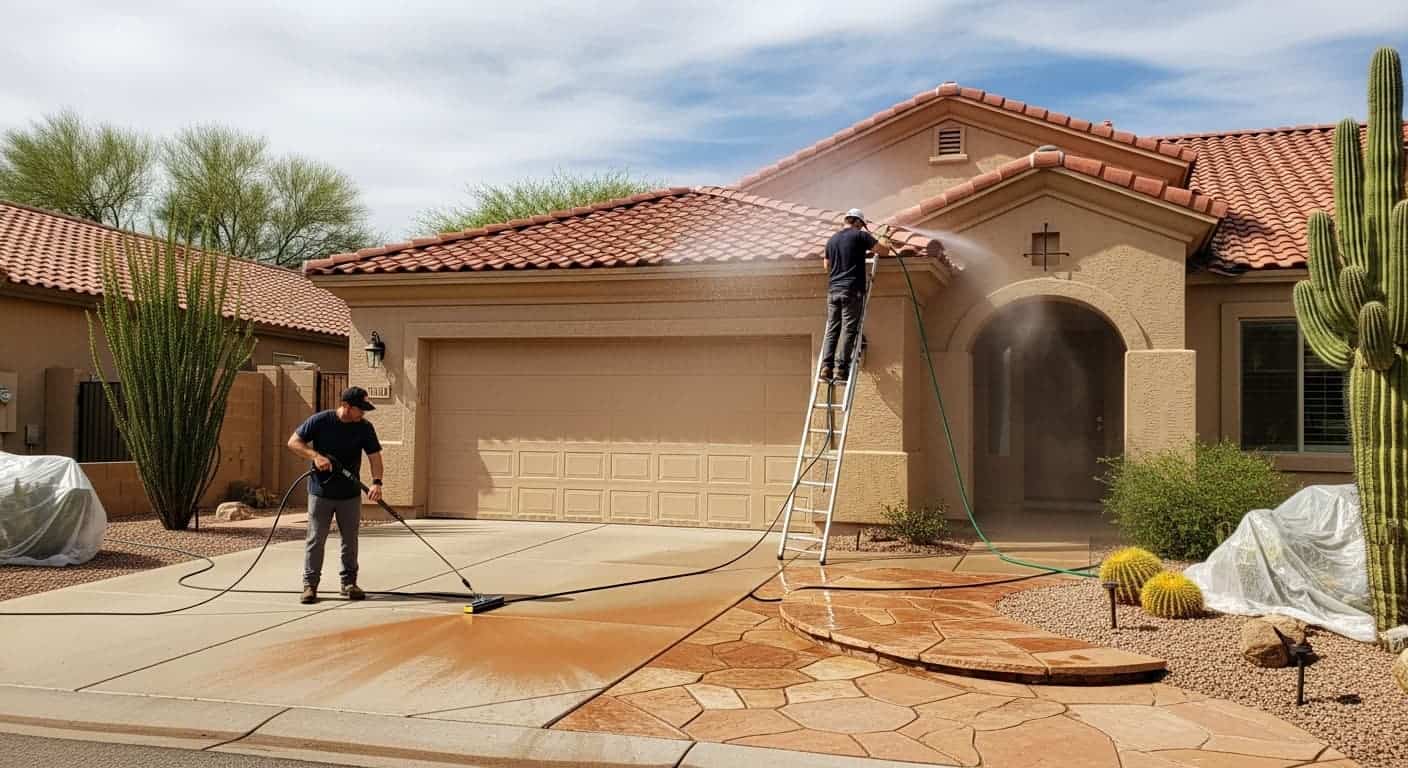
- Roof & House Wash (Soft Wash): We start from the top down, applying solution to the roof and eaves, then the siding. This ensures that dirty runoff flows down before the lower surfaces are cleaned.
- Flatwork Cleaning (Pressure Wash): Once the house is rinsed, we move to the driveway and walkways. We use surface cleaners (rotary scrubbers) to ensure an even clean without “zebra stripes.”
- Final Rinse: A low-pressure rinse of the entire property ensures no chemical residue remains on plants or windows.
Phoenix Regulations and Safety Tips for Low-Pressure Cleaning
Operating in the Phoenix Metro area requires adherence to specific local regulations, particularly regarding water usage and runoff. The City of Phoenix has strict storm drain regulations. Professional cleaners must ensure that wash water—especially water containing oil from driveways or heavy detergents—does not enter the storm drain system, which flows directly into our washes and riverbeds.
Furthermore, many HOAs in the Valley have strict guidelines regarding the appearance of roofs and driveways. While DIY pressure washing is popular, homeowners assume liability for any environmental fines or damage caused to neighbor’s property from overspray. Hiring a licensed, insured professional like Clean Surface ensures compliance with city codes and HOA standards.
Have questions about which method is right for your home? Give us a call or text today to discuss your project.
Frequently Asked Questions
Is soft washing safe for my desert landscaping?
Yes, when done correctly. Professional soft washing involves a thorough pre-wetting and post-rinsing of all surrounding vegetation. This dilutes any runoff to safe levels. At Clean Surface, we take extra care to cover delicate cacti and plants that are sensitive to excess water or cleaning agents.
Does soft washing use more water than pressure washing?
Surprisingly, soft washing often consumes less water. Because the cleaning solution does the work, we don’t need to blast gallons of water against the surface for long periods to remove dirt. It is a more efficient process.
How often should I soft wash my Phoenix home?
We recommend a full house wash every 12 to 24 months. However, if you live in an area with heavy construction (dust) or frequent dust storms, an annual cleaning after the monsoon season is ideal to protect your stucco.
Will pressure washing damage my concrete?
It can. If the pressure is too high (PSI) or the tip is held too close to the surface, it can strip the “cream” off the top of the concrete, exposing the aggregate underneath. This damage is permanent. This is why hiring a professional who knows the correct ratios is vital.