Why Post-Construction Cleanup Requires Professional Pressure Washing
The Critical Role of Expert Post-Construction Cleanup in Phoenix
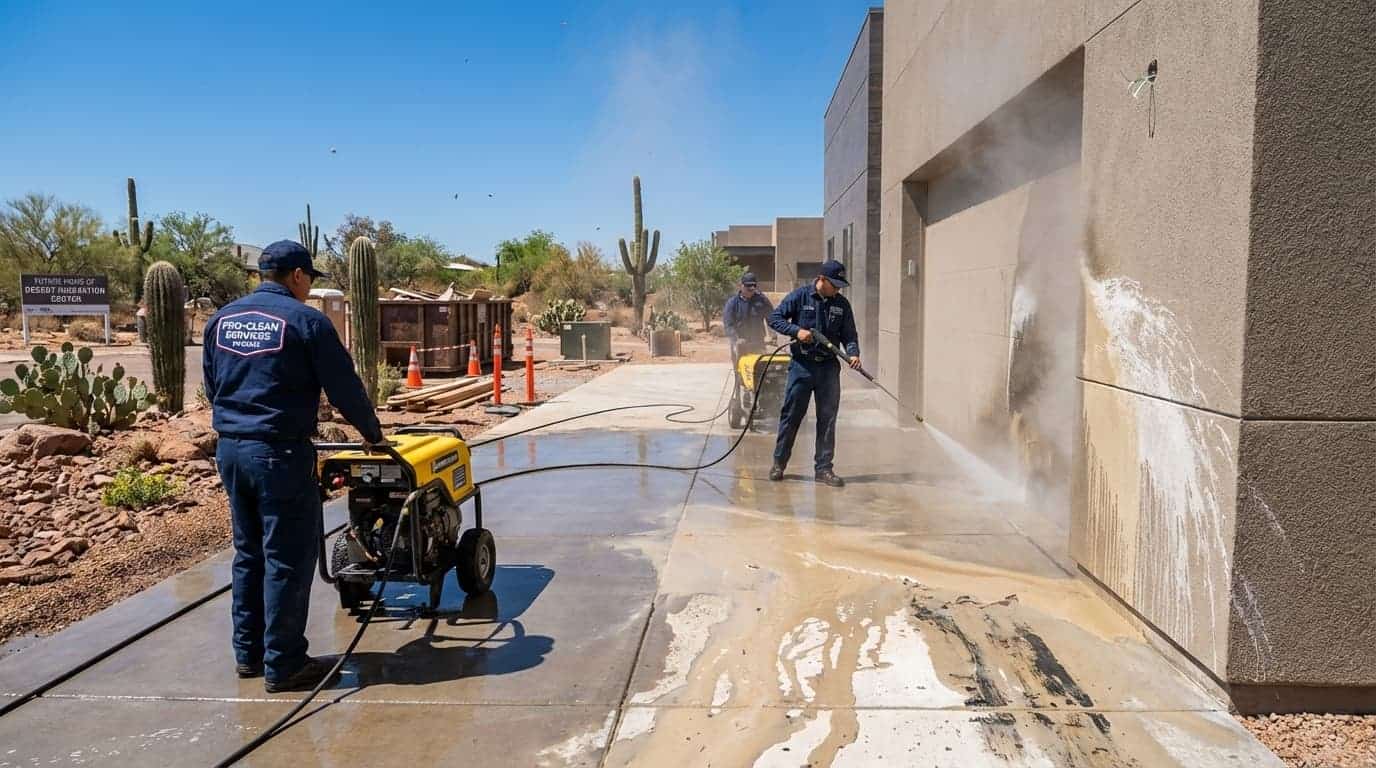
When the heavy machinery rolls out and the scaffolding comes down, a building project in the Valley of the Sun is not truly finished. For developers and contractors, executing the kind of thorough construction site cleanup phoenix demands is the final, crucial step before handing over the keys. The harsh desert environment combined with heavy building materials creates a unique mess that standard sweeping simply cannot fix. That is exactly why professional post-construction pressure washing is an absolute necessity to protect your investment, pass final inspections, and present a flawless finished product.
At Clean Surface Pressure Washing, we understand that wrapping up a commercial or residential build requires precision. Dust, hardened slurry, and chemical residues do not just look bad, they actively degrade new building materials. In this comprehensive guide, we will break down exactly why investing in expert pressure washing is the smartest financial decision a contractor can make at the end of a project.
What is Post-Construction Pressure Washing & Why It Matters in Phoenix
Post-construction pressure washing is the professional, systematic removal of construction debris, thick dust, concrete slurry, industrial adhesives, and chemical residue from a newly built or renovated property. Unlike standard maintenance washing, this process requires significantly higher PSI settings, specialized hot water techniques, and material-specific cleaning agents to break down stubborn industrial messes.
Operating in the Phoenix desert climate adds an entirely different layer of complexity to this process. The dry desert heat accelerates how quickly adhesives and concrete slurries bond to delicate surfaces. Furthermore, massive dust storms routinely deposit fine silica particles across the job site, and sudden monsoon moisture can trap these contaminants deep within porous building materials.
For the best results, professional cleanup is typically performed 24 to 48 hours after the major construction phases are complete, strictly before the final inspections take place. This ensures the property is flawless when the building inspector and the final client walk the grounds.
What Our Experts Remove
- Silica Dust: Microscopic particles that pose respiratory risks.
- Concrete Slurry: Highly alkaline residue that etches and stains surfaces.
- Adhesives and Tars: Sticky compounds that require hot water extraction.
- Chemical Spills: Oils, paints, and solvents that degrade asphalt and concrete.
The Hidden Costs of DIY or Inadequate Post-Construction Cleanup
Many developers attempt to cut corners by having their standard labor crew sweep and hose down the site. This approach almost always leads to massive hidden costs. Leaving construction residue behind causes rapid structural damage. Concrete slurry, for example, is highly alkaline and will permanently etch natural stone or brick if not properly neutralized and removed. Leftover industrial adhesives easily corrode metal fixtures, while trapped moisture under construction dust accelerates dangerous mold growth.
Beyond property damage, inadequate cleaning introduces severe health and safety risks. Failing to remove silica dust can lead to immediate OSHA compliance failures and serious respiratory hazards for future occupants. Leftover grease or slurry also creates massive slip-and-fall liabilities.
When final inspections fail due to a dirty site, the delays cost developers thousands of dollars in holding costs. Manual cleanup by a standard crew takes three to five times longer than deploying a professional pressure washing team, making DIY cleaning a highly inefficient use of expensive labor.
| Comparison Factor | DIY Manual Labor Cleanup | Professional Pressure Washing |
|---|---|---|
| Time to Complete | 1 to 2 weeks | 1 to 2 days |
| Slurry Removal | Scraping damages surface | Hot water lifts without damage |
| OSHA Compliance | High risk of silica dust violations | Full hazardous dust mitigation |
| Overall Cost Efficiency | Low, high hidden labor costs | High, rapid turnaround limits delays |
Phoenix’s Desert Climate: Why Standard Pressure Washing Isn’t Enough
Standard power washing might work in milder climates, but the extreme environment of Arizona requires a specialized approach. In Phoenix, summer temperatures frequently exceed 110 degrees. This extreme heat bakes construction adhesives and paint splatters into pavement and siding, accelerating material degradation.
Additionally, our notorious Haboobs, or dust storms, deposit incredibly fine silica particles that embed deeply into porous surfaces. When the monsoon season arrives between June and September, that sudden moisture traps the construction residue and dust, promoting mold and mildew in places you would not expect in a desert. Because of our incredibly low baseline humidity, concrete slurry dropped by masons hardens much faster than it does elsewhere, making standard cold-water washing completely useless.
Phoenix Seasonal Cleanup Calendar
- Spring, March to May: Ideal for removing winter build-up, moderate temperatures allow for safe chemical dwelling times.
- Summer, June to August: Requires early morning scheduling to prevent cleaning chemicals from flash-evaporating on hot surfaces.
- Monsoon, August to September: Critical phase for extracting trapped moisture and preventing mildew in newly framed or sided structures.
- Winter, November to February: Perfect conditions for heavy-duty concrete cleaning and large-scale commercial site preparation.
Material-Specific Damage: What Construction Debris Does to Different Surfaces
Not all building materials react the same way to construction debris. Applying a blanket cleaning method to an entire property will result in catastrophic damage. Clean Surface Pressure Washing uses specialized pressure settings and custom nozzle configurations for each specific material type on your property.
- Concrete: Susceptible to slurry etching, deep oil staining, and surface degradation if highly pressurized water is applied too close.
- Brick & Stone: Mortar splatter and adhesive residue easily bond to porous masonry, while harsh chemicals can bleach the natural color.
- Metal, steel and aluminum: Chemical spills and acidic cleaners can strip protective coatings, rapidly accelerating rust and corrosion.
- Glass & Windows: Concrete dust acts like sandpaper. Improper washing will permanently scratch the glass and reduce transparency.
- Vinyl Siding & Wood: Too much pressure destroys paint, splinters fresh wood, and forces water behind the siding where mold can grow.
- Asphalt & Parking Lots: Heavy machinery leaves tire marks and oil spills that degrade the structural integrity of fresh asphalt.
| Surface Material | Primary Debris Threat | Professional Solution |
|---|---|---|
| New Concrete | Alkaline Slurry Etching | Surface cleaner with neutralizing agents |
| Stucco / Siding | Embedded Silica Dust | Low-pressure Soft Washing |
| Commercial Glass | Adhesive Film and Tar | Hot water extraction, zero-pressure rinse |
Professional Pressure Washing vs. DIY: Equipment, Techniques & Results
The gap between rental equipment and professional-grade pressure washing rigs is massive. Standard rental units typically max out between 1,500 and 2,500 PSI, which is fine for washing a driveway but completely inadequate for a commercial construction site. Professional post-construction equipment requires 3,000 to 4,000 PSI, paired with extreme precision to avoid surface damage.
The biggest differentiator is temperature. Rental units use cold water, which does absolutely nothing to industrial adhesives, grease, or hardened paints. Professional crews use heavy-duty hot water systems that melt away adhesives, sterilize the surfaces, and significantly reduce drying times. We also utilize high-end, biodegradable cleaning agents specifically formulated to break down construction residue without harming the surrounding desert landscaping.
When you rely on professional crews, large commercial sites that would take weeks for laborers to clean manually are expertly finalized in just one to two days.
Phoenix & Arizona Compliance Requirements for Post-Construction Cleanup
In Arizona, post-construction cleanup is heavily regulated. Ignorance of local compliance laws can result in massive fines and project shutdowns. Clean Surface Pressure Washing ensures your site is fully compliant before the inspector arrives.
The Phoenix Compliance Checklist
- OSHA Silica Dust Standards: We utilize wet-washing methods that prevent harmful dust from going airborne, keeping your site OSHA compliant.
- Phoenix City Dust Control Ordinances: Local laws require strict management of track-out dirt on public roads. We clean entry and exit points to keep you legally protected.
- ADEQ Wastewater Regulations: The Arizona Department of Environmental Quality strictly monitors chemical runoff. We use compliant, biodegradable detergents and proper water reclamation techniques.
- Final Inspection Readiness: Inspectors look for residual hazards, clear walkways, and clean emergency exits. We guarantee these areas are spotless.
The 2026 Post-Construction Pressure Washing Cost Guide for Phoenix
Budgeting for post-construction cleanup in 2026 requires understanding current market rates. Costs are generally calculated per square foot and vary based on site size, the specific type of debris, material sensitivity, and timeline urgency.
Small projects under 5,000 square feet naturally have a slightly higher per-square-foot cost due to equipment mobilization, whereas large commercial and multifamily developments benefit from economies of scale. Clean Surface Pressure Washing offers budget-friendly scheduling options, including off-peak hours and bundled services, to maximize your return on investment.
The true ROI of professional cleanup lies in risk mitigation. By spending a fraction of your budget on expert pressure washing, you prevent incredibly costly material repairs, avoid final inspection delays, and maintain the absolute highest property value upon handover.
Have questions about preparing your job site for final inspection or need a custom quote for your next development? Give Clean Surface Pressure Washing a call today to speak with our Phoenix construction cleanup experts.
Frequently Asked Questions
How soon after construction should I schedule pressure washing?
We recommend scheduling our services 24 to 48 hours after all heavy construction, painting, and landscaping are completed. This allows our team to remove all final debris right before your official building inspections.
Will high-pressure washing damage newly poured concrete?
Not when handled by professionals. New concrete is highly vulnerable to etching if the wrong pressure is applied. We use specialized surface cleaners and dial in the exact PSI and water temperature required to clean fresh concrete without degrading the top layer.
Do you reclaim water to comply with Phoenix environmental regulations?
Yes, we adhere strictly to all Arizona Department of Environmental Quality standards. We use environmentally safe, biodegradable cleaning agents and manage water runoff carefully to ensure your job site remains fully compliant with city codes.