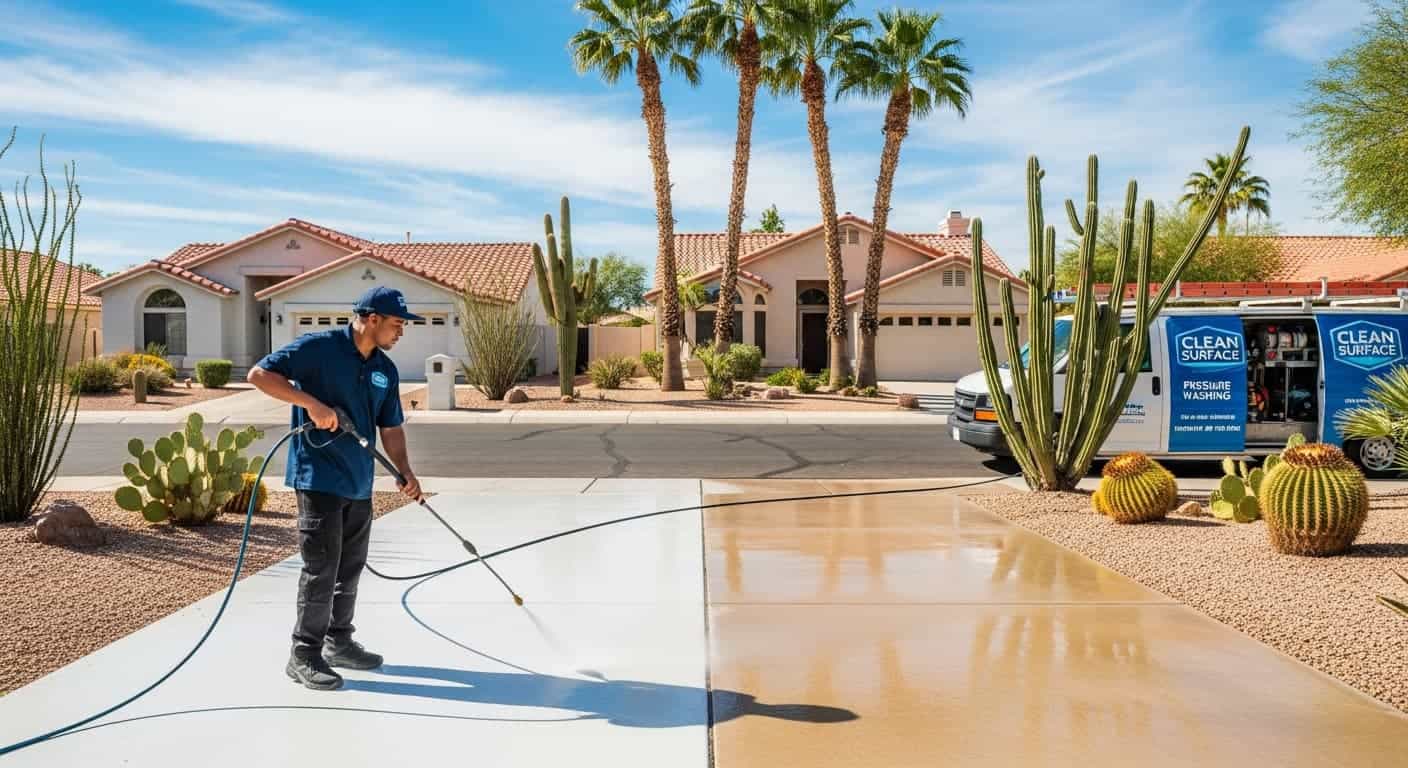
What Is Pressure Washing? Defining High-Pressure Cleaning Basics
Pressure washing is a powerful exterior cleaning method that uses high-pressure water spray to remove stubborn dirt, grime, mold, mildew, algae, and accumulated debris from various outdoor surfaces. Unlike traditional scrubbing or garden hose cleaning, pressure washing employs specialized equipment that forces water through a concentrated nozzle at pressures typically ranging from 1,500 to 4,000 pounds per square inch (PSI), combined with flow rates between 1.5 and 4.0 gallons per minute (GPM). This combination of force and volume creates a cleaning action powerful enough to strip away years of buildup in minutes.
In Phoenix, AZ, pressure washing has become an essential maintenance service due to our unique desert environment. The combination of dust storms, caliche soil deposits, hard water mineral stains, and intense UV exposure creates a perfect storm of surface contamination that regular cleaning methods simply cannot address. When homeowners and business owners search for effective high-pressure cleaning solutions in Phoenix, they’re typically dealing with these region-specific challenges that make professional pressure washing not just beneficial, but necessary for property maintenance.
Understanding the fundamentals of pressure washing begins with recognizing the key components that make it effective:
- Pressure washing uses cold high-pressure water jets to break down contaminants without relying on heat or harsh chemicals
- Ideal for Phoenix dust and hard water stains that accumulate rapidly in our arid climate, particularly on driveways, exterior walls, and pool decking
- Not suitable for delicate surfaces without low-PSI settings — surfaces like painted wood, certain roof tiles, and soft stone require adjusted pressure levels to prevent damage
- Distinguishes from power washing which incorporates heated water for grease removal and sanitization, making it more suitable for commercial kitchens or oil-stained surfaces
The mechanics of pressure washing center around two critical measurements that determine cleaning effectiveness and safety. PSI (pounds per square inch) measures the force or impact strength of the water stream — essentially how hard the water hits the surface. A higher PSI means more aggressive cleaning power, ideal for concrete driveways or commercial parking lots, but potentially damaging to softer materials. GPM (gallons per minute) measures the volume of water flow, which determines how quickly and thoroughly contaminants are rinsed away after being loosened by the pressure.
At Clean Surface Pressure Washing, we utilize professional-grade equipment calibrated specifically for Phoenix conditions, ensuring optimal cleaning results without the risks associated with DIY approaches or improperly adjusted consumer-grade washers. Our technicians understand that effective high-pressure cleaning isn’t just about maximum force — it’s about matching the right pressure, flow rate, and technique to each specific surface and contamination type.
The distinction between pressure washing and other cleaning methods becomes particularly important when addressing Phoenix-specific challenges. Our desert dust contains fine silica particles that embed themselves in porous surfaces like stucco and concrete. Hard water from our municipal supply leaves calcium and magnesium deposits that create unsightly white staining on everything from exterior walls to pool tiles. These contaminants require the concentrated force of high-pressure cleaning to effectively remove without damaging the underlying surface.
How Does Pressure Washing Work? Step-by-Step Mechanics
The pressure washing process relies on a sophisticated mechanical system that transforms ordinary water into a powerful cleaning tool. At the heart of every pressure washer is a pump — either electric or gas-powered — that draws water from a supply source and forces it through a high-pressure hose and specialized nozzle. This pump creates the pressure differential that gives pressure washing its cleaning power, compressing water molecules and accelerating them to speeds that can exceed 100 miles per hour as they exit the nozzle.
The complete pressure washing system consists of several integrated components working in harmony:
- Water Source: A garden hose connection or water tank provides the supply, typically at normal household pressure (40-60 PSI)
- Pump Assembly: The core component that pressurizes water, available in axial cam (consumer-grade), wobble plate (mid-range), or triplex plunger (professional-grade) configurations
- Pressure Hose: Reinforced tubing rated to withstand the system’s maximum PSI, typically 50-100 feet in length for residential applications
- Spray Wand and Nozzles: Interchangeable tips that shape the water stream, ranging from wide fan patterns (low impact) to concentrated jets (maximum force)
- Detergent Injection System: Optional component that introduces cleaning solutions at low pressure for enhanced cleaning on stubborn stains
Professional pressure washing in Phoenix requires specific adaptations to address our environmental conditions. Dust-resistant quick-connect fittings prevent the fine desert particles from contaminating connections and causing seal failures. Water-efficient models with adjustable pressure controls help conserve our precious water resources while still delivering thorough cleaning results. Many professional systems also incorporate filtration to protect the pump from sediment in Phoenix’s water supply, extending equipment life and ensuring consistent performance.
| Surface Type | Recommended PSI | Recommended GPM | Typical Phoenix Application |
|---|---|---|---|
| Concrete Driveways | 3,000-4,000 | 3.0-4.0 | Removing oil stains, tire marks, dust accumulation |
| Stucco Walls | 1,500-2,500 | 2.0-3.0 | Dust removal, hard water stain elimination |
| Tile Roofing | 1,200-2,000 | 2.5-3.5 | Algae removal, monsoon debris cleaning |
| Wood Fencing | 500-1,200 | 1.5-2.5 | Gentle cleaning without fiber damage |
| Pool Decking | 2,000-3,000 | 2.5-3.5 | Calcium deposit removal, slip prevention |
| Commercial Pavement | 3,500-4,000 | 4.0+ | Heavy traffic stain removal, gum extraction |
The actual cleaning process follows a systematic approach that maximizes effectiveness while protecting surfaces. Professional technicians begin by selecting the appropriate nozzle — color-coded for easy identification — based on the surface material and contamination level. Red nozzles (0-degree) create a concentrated jet for the toughest stains but require careful handling to avoid surface damage. Yellow nozzles (15-degree) provide aggressive cleaning for concrete and masonry. Green nozzles (25-degree) offer general-purpose cleaning for most surfaces. White nozzles (40-degree) deliver gentle cleaning for delicate materials. Black nozzles apply detergent at low pressure.
At Clean Surface Pressure Washing, our commercial-grade equipment features advanced controls that allow real-time pressure adjustment during operation. This capability proves invaluable when working on Phoenix homes that often combine multiple exterior materials — from stucco walls to concrete driveways to tile roofing — all requiring different pressure settings for safe, effective cleaning. Our technicians are trained to recognize surface conditions and adjust equipment settings accordingly, preventing the damage that commonly results from DIY efforts using single-pressure consumer washers.
The Phoenix environment introduces unique operational considerations that separate professional services from amateur attempts. Desert dust doesn’t just sit on surfaces — it combines with morning dew and monsoon humidity to create a cement-like bond with porous materials. This requires extended dwell time when using cleaning solutions and multiple passes with appropriately pressured water to fully remove. Hard water mineral deposits often require specialized descaling agents applied through the detergent injection system before pressure washing can effectively remove the staining.
Top Benefits of Pressure Washing for Phoenix AZ Properties
Regular pressure washing delivers measurable value that extends far beyond simple aesthetic improvement. For Phoenix homeowners and commercial property owners, professional high-pressure cleaning represents one of the most cost-effective maintenance investments available, providing returns that compound over time through multiple mechanisms. The benefits range from immediate visual transformation to long-term structural preservation, with particularly pronounced advantages in our challenging desert climate.
Dramatic Curb Appeal Enhancement: The most immediately noticeable benefit of pressure washing is the striking visual transformation it creates. Surfaces that have gradually accumulated months or years of dust, grime, and staining suddenly look new again. In Phoenix’s competitive real estate market, this curb appeal difference can be the deciding factor for potential buyers or tenants. Real estate professionals consistently report that pressure-washed properties photograph better, show better, and command higher asking prices. The psychological impact of clean exterior surfaces creates an impression of quality maintenance that influences perceptions of the entire property.
Mold and Mildew Prevention: While Phoenix’s low humidity might suggest mold isn’t a concern, certain areas of properties — particularly north-facing walls, covered patios, and areas with irrigation overspray — create microenvironments where biological growth thrives. Desert monsoon seasons bring sustained humidity that accelerates mold and mildew development on these surfaces. Pressure washing removes existing growth and the organic matter that feeds it, disrupting the growth cycle and preventing the health concerns and surface degradation associated with biological contamination. This preventive measure proves particularly valuable for properties with residents who have respiratory sensitivities.
Extended Surface Lifespan: The most significant long-term financial benefit of regular pressure washing lies in surface preservation. Contaminants don’t just sit harmlessly on exterior surfaces — they actively contribute to deterioration through chemical and mechanical processes. Consider these documented lifespan extensions from regular professional pressure washing:
- Tile Roofing: 5-10 years additional life through removal of damaging algae and prevention of granule loss — representing $8,000-$15,000 in delayed replacement costs for typical Phoenix homes
- Concrete Surfaces: 40-50% slower deterioration rate by removing acids and salts that cause spalling and cracking — potentially decades of additional service life for driveways and walkways
- Wood Structures: 3-7 years extended life for fences and decks by preventing rot-causing moisture retention from dirt and organic buildup
- Exterior Paint: 2-4 additional years before repainting becomes necessary, saving $4,000-$8,000 on typical single-story Phoenix homes
Increased Property Value: Multiple real estate studies have quantified the return on investment from professional pressure washing, with findings particularly relevant to Phoenix markets. Properties that undergo comprehensive exterior cleaning before listing typically see 5-10% increases in sale price compared to similar properties without this preparation. For a median Phoenix home valued at $450,000, this translates to $22,500-$45,000 in additional equity — an extraordinary return on a pressure washing investment typically ranging from $300-$800 for comprehensive residential service.
Phoenix-Specific Benefits: Our desert environment creates unique contamination challenges that make regular pressure washing particularly valuable:
- Caliche Dust Combat: Our alkaline soil produces fine, cement-like dust that embeds in porous surfaces and becomes harder to remove over time; quarterly pressure washing prevents the permanent staining that eventually requires expensive surface replacement
- Hard Water Spot Elimination: Phoenix’s water contains high concentrations of calcium and magnesium that create white, crusty deposits on any surface contacted by sprinklers or evaporating water; professional pressure washing with appropriate descaling agents removes these deposits before they etch into surfaces
- Monsoon Grime Removal: Summer monsoons deliver not just water but suspended dust, pollen, and organic debris that create brown staining on all exterior surfaces; annual post-monsoon pressure washing prevents this material from bonding permanently to surfaces through subsequent sun exposure
- Pool Area Maintenance: The combination of pool chemicals, sunscreen, and hard water creates unique staining on pool decking that becomes slip-hazardous if not regularly removed; pressure washing maintains both safety and appearance in these high-use areas
Clean Surface Pressure Washing specializes in addressing these Phoenix-specific challenges through our residential and commercial services. Our technicians understand the unique contamination patterns created by desert living and employ specialized techniques and cleaning solutions designed specifically for Arizona conditions. We’ve developed protocols that maximize cleaning effectiveness while conserving water — an increasingly important consideration as Phoenix continues to implement water conservation initiatives.
Pressure Washing vs. High-Pressure Cleaning: Key Differences and When to Use Each
The terms “pressure washing” and “high-pressure cleaning” are frequently used interchangeably in the service industry, creating confusion about whether they represent different processes or simply different names for the same service. While they do share fundamental similarities — both use pressurized water to clean surfaces — understanding the nuanced differences helps property owners make informed decisions about which approach best suits their specific needs and surfaces.
Pressure washing traditionally refers to the standard application of cold, pressurized water at fixed or minimally adjustable settings typically ranging from 2,500 to 4,000 PSI. This approach works exceptionally well for hard, durable surfaces like concrete, asphalt, and bare masonry where maximum cleaning power is needed to remove deep-set stains, embedded dirt, or years of accumulated grime. The emphasis in traditional pressure washing is on force — using the highest safe pressure to achieve the fastest, most thorough cleaning of robust surfaces.
High-pressure cleaning represents a more nuanced approach that emphasizes adjustable pressure settings and technique variations to accommodate a broader range of surface types and conditions. While the equipment may be capable of generating the same maximum PSI as traditional pressure washers, high-pressure cleaning methodology incorporates multiple pressure levels — from gentle soft washing at 500 PSI or below for delicate surfaces, through medium-pressure settings for painted surfaces and wood, to high-pressure applications for concrete and stone. This versatility makes high-pressure cleaning the preferred terminology for professional services that handle diverse property types with multiple exterior materials.