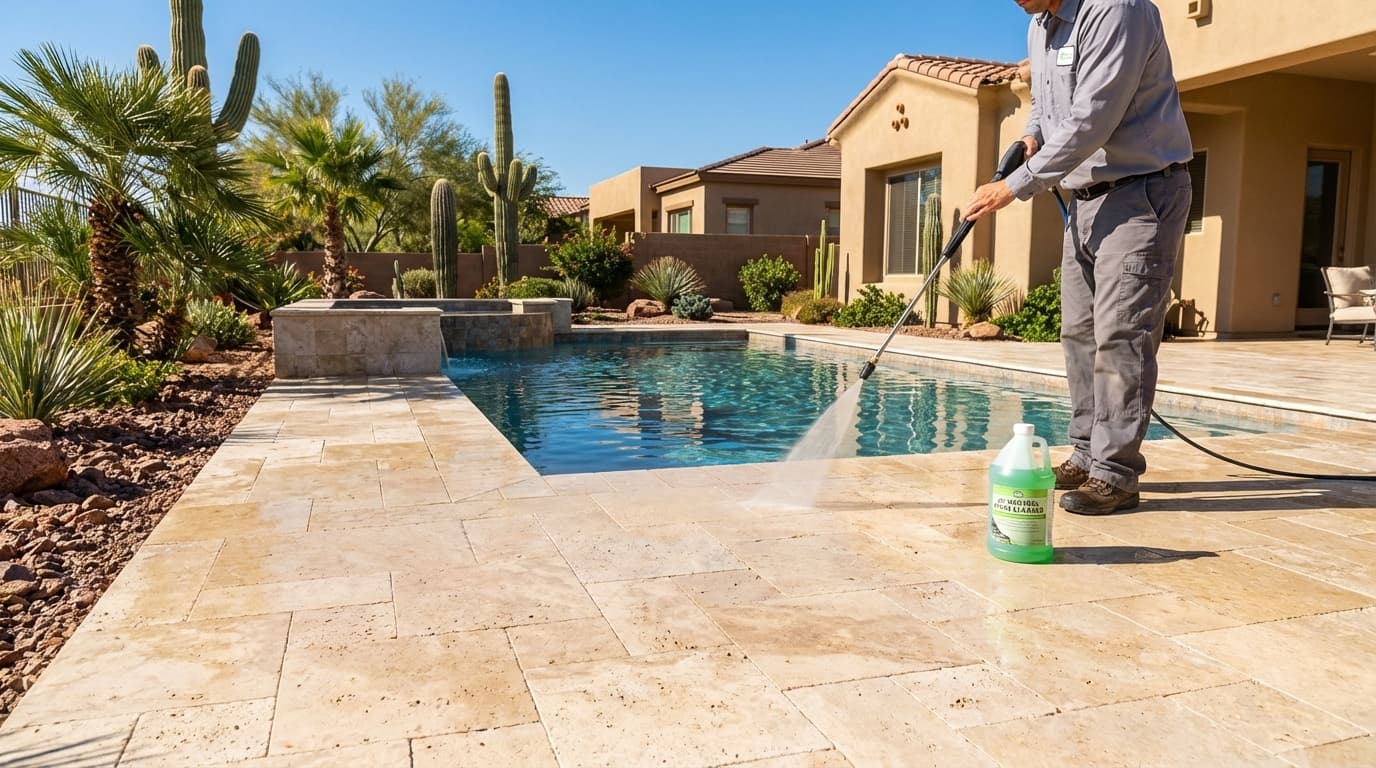
Cleaning Travertine Pool Decks: Dos and Don’ts
Why Travertine Requires Special Care in Phoenix
When it comes to travertine cleaning phoenix homeowners often learn the hard way that this beautiful stone requires highly specialized care. Unlike standard concrete or basic brick pavers, travertine is a porous natural stone that easily absorbs liquids and reacts strongly to its environment. If you are managing your own pool deck cleaning, you absolutely must understand how to protect this premium surface. The harsh Arizona climate features intense UV exposure, mineral heavy hard water, and frequent abrasive dust storms, all of which accelerate wear and tear.
Improperly washing travertine tiles can cause severe etching, stubborn staining, and deep structural damage. However, by following the correct maintenance guidelines, you can easily extend the lifespan of your deck by 10 years or more. At Clean Surface Pressure Washing, we fully understand the specific climate challenges that Phoenix properties face, and we are dedicated to helping you protect your outdoor investment with expert, localized knowledge.
The Critical Dos, Best Practices for Travertine Pool Decks
DO Use Neutral pH Cleaners
Because travertine is naturally porous and contains calcium carbonate, maintaining a neutral pH of 7.0 during cleaning is absolutely essential. Highly acidic cleaners like vinegar or lemon juice will permanently etch the surface of your travertine, eating away at the finish. On the other end of the spectrum, alkaline heavy commercial cleaners can leave behind a thick, hazy residue that attracts more dirt over time. We strongly recommend using specific, pH balanced stone cleaners designed exclusively for natural stone. When you hire professionals, such as our team at Clean Surface Pressure Washing, our technicians use only premium pH neutral solutions to ensure your deck is cleaned safely and thoroughly.
DO Seal Your Travertine Every 2 Years
Consistent sealing is your primary defense against the elements. A high quality sealant prevents moisture absorption, stops oxidation, and heavily reduces the risk of efflorescence, which is the unsightly white mineral buildup caused by hard water. In Arizona, it is critical to use UV rated sealants to protect the stone from relentless sun exposure. Additionally, non slip finishes can be added to improve safety around wet pool areas. The cost benefit is massive, spending $200 to $400 on preventative sealing can easily save you from $2,000 or more in future tile replacements. For best results, seal your deck right before the busy summer pool season begins. Clean Surface Pressure Washing offers specialized UV rated and non slip finish options tailored for local properties.
| Climate Type | Primary Environmental Factors | Recommended Sealing Frequency |
|---|---|---|
| Desert (Phoenix, AZ) | Extreme UV rays, Hard Water, Dust Storms | Every 1 to 2 Years |
| Temperate | Moderate Sun, Regular Rain | Every 3 to 4 Years |
| Tropical | High Humidity, Salt Air Exposure | Every 1 to 3 Years |
DO Soft Wash or Steam Clean, Not Pressure Wash
Aggressive, high pressure washing is the enemy of natural stone. Water pressure exceeding 1200 psi can easily blast away the surface of your travertine, causing pitting and cracking. Instead, you should always soft wash the surface. Soft washing uses gentle techniques and specialized cleaning agents to lift dirt safely. Alternatively, hot steam extraction at 225 degrees Fahrenheit is incredibly safe and highly effective. Steam removes deeply embedded dirt without etching the stone and leaves surfaces completely dry and residue free. Clean Surface Pressure Washing specializes in this gentle soft washing approach, completely eliminating the risk of pressure damage.
DO Hone and Polish Every 5 to 7 Years
Over time, even well maintained travertine will develop microscopic surface scratches and lose its original luster. Honing removes this surface damage and restores the uniform appearance of your deck, while polishing brings back the natural, vibrant beauty of the stone. The frequency of this service depends entirely on foot traffic and daily sun exposure. Because this restorative process requires heavy, calibrated professional equipment, it is strictly not a DIY friendly project. You should always rely on a professional restoration service to tackle honing and polishing safely.
DO Clean Grout Lines Separately
Grout requires entirely different treatment than the surrounding natural stone. Using specialized hybrid solvent sealers protects your grout lines for over two years, preventing deep set staining and ugly discoloration. When performing routine maintenance, always use soft bristle brushes specifically targeted at the grout, avoiding harsh scrubbing on the adjacent stone tiles. Clean Surface Pressure Washing brings targeted expertise to handle both your delicate stone and your grout lines with precision.
The Critical Don’ts, Mistakes That Damage Travertine
DON’T Use Acidic or Vinegar Based Cleaners
Acid chemically burns and etches the surface of travertine permanently. You must never use common household acids like white vinegar, lemon juice, or generic commercial bathroom cleaners on your pool deck. Etching creates dull, rough spots that compromise the protective layer and weaken the stone. Once this chemical damage occurs, it is irreversible without expensive professional honing.
- Do NOT use white vinegar
- Do NOT use citrus based all purpose cleaners
- Do NOT use heavy duty commercial degreasers
- Do NOT use rust removers or calcium dissolving agents
DON’T Pressure Wash Above 1200 PSI
Blasting your deck with water pressure greater than 1200 psi is a recipe for disaster. High pressure easily cracks, pits, and chips natural stone tiles. This mistake is especially dangerous on older decks or previously compromised tiles. Furthermore, excessive pressure forces water deep into the porous structure of the stone, leading directly to severe efflorescence. Many consumer grade DIY pressure washers easily exceed safe limits, which is why professional equipment is meticulously calibrated specifically for stone surfaces. Contrast the risky DIY power washing method with the safe, guaranteed soft wash approach utilized by Clean Surface Pressure Washing.
DON’T Neglect Sealing, The Biggest Mistake
Leaving your travertine unsealed means it acts like a sponge, rapidly absorbing stains, dirt, and damaging moisture. Phoenix hard water is notorious for leaving heavy mineral deposits that are incredibly difficult to remove safely. Without a protective sealant barrier, efflorescence develops quickly, creating a chalky white haze over your beautiful deck. Repair costs escalate rapidly when the stone degrades from the inside out. Remember, sealing is preventative, not reactive. Neglecting this crucial step is the number one reason local homeowners end up calling professionals for expensive restoration work.
DON’T Mix Cleaning Products
Combining different household chemicals can cause highly dangerous reactions that severely damage your stone or create toxic fumes. For example, mixing bleach and ammonia creates a lethal gas. Even mixing seemingly harmless surface cleaners leaves a thick, sticky chemical residue that attracts dust and dirt from the yard. For routine care, stick to a single, high quality, pH neutral product to ensure both your safety and the longevity of your pool deck.
DON’T Ignore Stains or Damage
Early intervention is the key to preventing costly full scale repairs. If left untreated, chemical spills, hard water scaling, and organic stains set deep into the stone over time and become completely permanent. Additionally, damaged, cracked, or severely pitted tiles should be evaluated and replaced immediately before the structural weakness spreads to surrounding tiles and the foundation below.
Protecting your natural stone investment requires the right tools, knowledge, and experience. If you are unsure about your deck’s condition, want to determine if it is time for a professional resealing, or simply want to guarantee a pristine and damage free clean, we are here to help. Have questions about maintaining your outdoor living space? Give Clean Surface Pressure Washing a call today.
Frequently Asked Questions
Can I use a standard power washer on my travertine pool deck?
No, standard DIY power washers almost always exceed the safe pressure limit of 1200 psi. Blasting the stone can cause severe pitting, cracking, and force excessive water deep into the pores, leading to efflorescence. Professional soft washing is the safest alternative.
How often should I sweep or rinse my pool deck in Phoenix?
Due to the frequent dust storms and dry conditions in Arizona, it is best to sweep your deck weekly to remove abrasive debris. You should give it a light rinse with a standard garden hose every two weeks to prevent dust from settling into the pores.
What is the white powder appearing on my natural stone tiles?
That chalky white powder is called efflorescence. It occurs when moisture travels through porous, unsealed stone, bringing natural salts and hard water minerals up to the surface. Proper cleaning and regular preventative sealing will stop this issue entirely.
Is it safe to use bleach to remove mold from travertine?
No, straight bleach is highly alkaline and can severely damage the protective finish of your stone, leaving it vulnerable to future staining. If you have organic growth or mold around your pool, you need a specialized soft wash treatment that safely neutralizes the growth without harming the travertine.