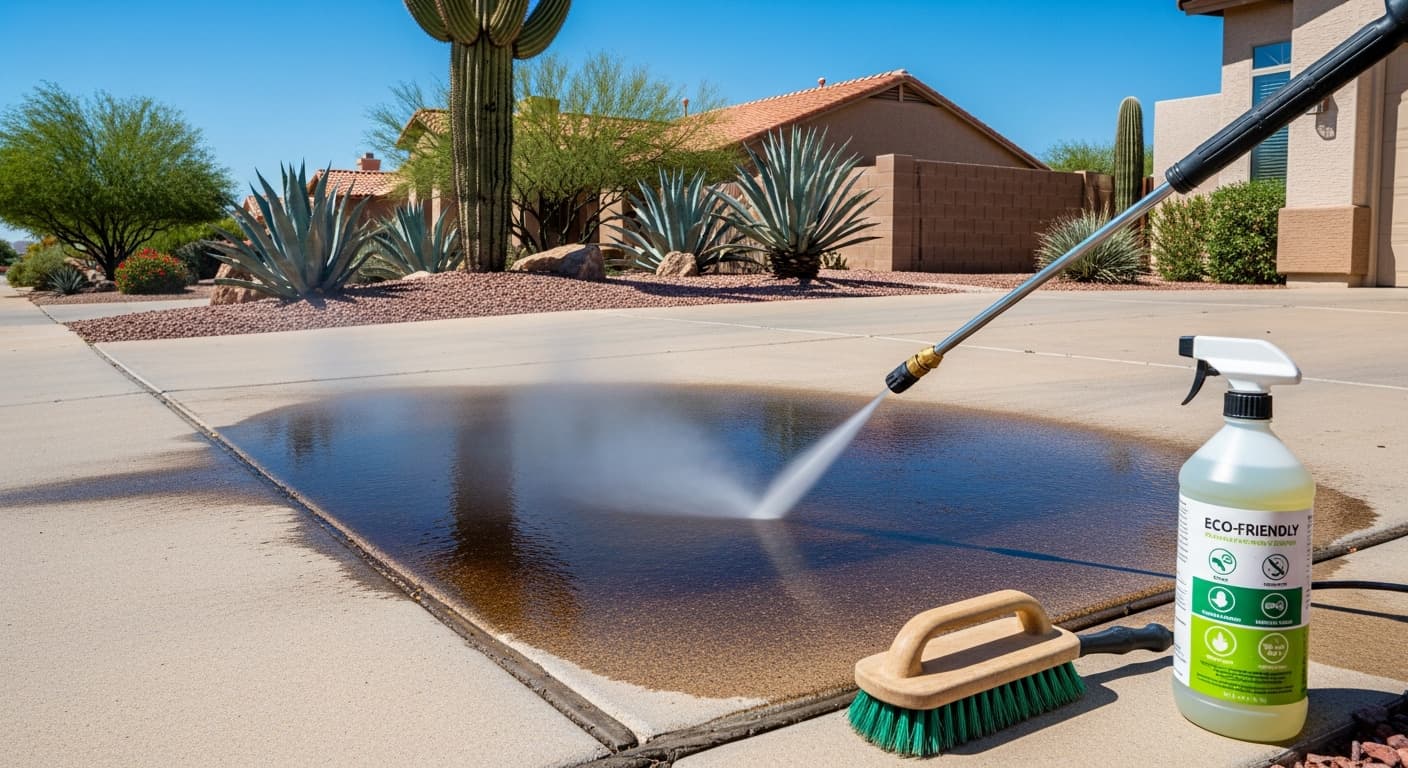
Why Oil Stains Are a Problem on Phoenix Driveways (And When DIY Isn’t Enough)
Living in the Valley, we deal with extreme conditions that make oil stains on driveway removal significantly harder than in cooler climates. In Phoenix, your concrete isn’t just a surface; in the summer, it acts like a sponge baking in an oven. When a car leaks oil or transmission fluid onto a driveway that is 150 degrees Fahrenheit, the heat reduces the viscosity of the oil, allowing it to penetrate rapidly and deeply into the pores of the cement.
For many homeowners, this isn’t just an aesthetic annoyance; it is a compliance issue. Many HOAs in Maricopa County are strict about driveway appearance, and visible oil stains can lead to warning letters and fines. Furthermore, because concrete is porous, the oil binds to the material. While DIY methods can handle surface-level spills, deep-set stains often require the heat and power of professional equipment.
Here is why local driveways suffer the most:
- Extreme Surface Temperatures: Heat causes oil to thin out and soak deeper before you even notice the leak.
- Desert Dust: The fine dust in Phoenix mixes with the oil, creating a sludge that is difficult to scrub away.
- Monsoon Moisture: Rapid cycles of baking heat followed by intense monsoon rain can lock contaminants into the concrete matrix.
Essential Tools and Materials for Cleaning Oil from Driveway
Before you start the engine on a pressure washer, you need the right chemical setup to break down the hydrocarbons. To clean oil off driveway concrete effectively, you cannot rely on water alone—oil and water do not mix. You need a degreaser to emulsify the oil so it can be rinsed away.
Here is the gear you will need for a successful DIY attempt:
- Pressure Washer: You need a machine rated between 2,500 and 3,000 PSI. Electric washers usually lack the power for deep oil removal.
- Absorbent Material: Cat litter (non-clumping), sawdust, or baking soda for fresh spills.
- Industrial Degreaser: Products like Purple Power, Zep, or a strong mix of Dawn dish soap for lighter stains.
- Stiff Bristle Brush: A deck brush with synthetic bristles is essential for agitating the chemical into the pores.
- Safety Gear: Protective eyewear and closed-toe shoes are mandatory.
Note for Phoenix residents: Be mindful of the chemicals you choose. Because our storm drains often lead directly to washes and riverbeds, using biodegradable, phosphate-free cleaners is highly recommended to protect local wildlife and adhere to city codes.
Step-by-Step Guide: How to Clean Oil Stains from Driveway with Pressure Washing
If you are ready to tackle the job, follow this process to ensure you clean oil from driveway surfaces without damaging the concrete cream (the smooth top layer).
Step 1: Absorb Excess Oil
If the stain is fresh or wet, do not add water yet. Cover the area generously with cat litter or sawdust. Grind it in with your shoe and let it sit for 24 to 48 hours to pull up as much surface oil as possible. Sweep this up and dispose of it properly.
Step 2: Apply Degreaser
Pour your degreaser directly onto the stain. Do not dilute it for heavy stains. In the Phoenix heat, chemicals dry out fast. You must keep the area wet. Let the degreaser dwell for 30 to 60 minutes. If it starts to dry, mist it lightly with water.
Step 3: Agitate the Surface
This is the most critical step for cleaning cement driveway stains. Use your stiff brush and scrub vigorously. You are trying to work the soap down into the concrete pores to grab the oil molecules.
Step 4: Pressure Wash
Using a 25-degree tip (usually green), start washing. Keep the wand tip about 6 to 10 inches from the surface. Move in even, sweeping motions. Do not hold the tip too close, or you risk etching the concrete, leaving permanent “scar” lines.
Step 5: Rinse and Inspect
Switch to a wider tip (40-degree, white) to rinse the dirty water away from the clean area. Once the concrete dries, inspect the stain. You may need to repeat steps 2-4.
Phoenix-Specific Tips for Cleaning Cement Driveways
Cleaning cement driveway surfaces in the desert requires specific timing. Here is how to handle local challenges:
- Watch the Thermometer: Do not attempt this between 11 AM and 4 PM during summer. The surface temperature causes degreasers to flash-dry, rendering them ineffective and potentially staining the concrete further. Early morning is best.
- Hard Water Issues: Phoenix water is incredibly hard. If you let the rinse water air dry, you may end up with white calcium deposits outlining the spot you just cleaned. Use a squeegee to push standing water off the driveway after rinsing.
- Desert Grime: Sometimes, what looks like a stain is actually a “clean spot” on a dirty driveway. If you clean one oil spot, it might look bright white compared to the rest of the dusty driveway. You often have to wash the entire section to make it match.
Common Mistakes and Troubleshooting
We see many homeowners accidentally damage their property trying to save a few dollars. Here is a troubleshooting guide to keep you on the right track.
| Mistake | Consequence | The Fix |
|---|---|---|
| Using too much pressure (High PSI) | Etching or pitting the concrete surface. | Lower pressure to 2500 PSI and rely on the degreaser chemical to do the work, not the water force. |
| Rinsing immediately without scrubbing | The oil remains stuck in the pores; the stain doesn’t move. | Let the chemical dwell for at least 30 minutes and scrub hard with a stiff brush. |
| Using Muriatic Acid | Eats away the cement paste, exposing aggregate (rocks). | Avoid acid for oil. Use alkaline-based degreasers only. |
| Ignoring runoff | Oil and chemicals stain the sidewalk or street. | Dam the runoff with kitty litter or wash toward a landscaped area (if using eco-safe soap). |
2026 Phoenix Pressure Washing Cost Guide & Pro vs. DIY Comparison
Is it worth doing it yourself? That depends on the severity of the stain and the equipment you already own. Here is a breakdown of the costs involved in 2026 for Phoenix residents.
DIY Cost Breakdown:
- Pressure Washer Rental (Home Depot/Lowes): $75 – $100 per day.
- Degreaser & Chemicals: $25 – $40.
- Brushes & Safety Gear: $20 – $30.
- Total Estimated DIY Cost: $120 – $170 + 4-6 hours of labor.
Professional Service Cost:
- Average Driveway Cleaning: $200 – $400 (depending on size and stain severity).
- Benefit: Includes hot water treatment (which rentals rarely offer), industrial-grade surface cleaners, and runoff management.
Phoenix Regulations for Driveway Cleaning Runoff
In Phoenix and surrounding areas like Scottsdale and Mesa, there are strict regulations regarding “illicit discharge.” You cannot simply blast oil and chemical sludge down the driveway and into the storm drain.
Storm drains in our valley flow untreated into natural waterways. To stay compliant, you must prevent wash water containing oil or strong detergents from entering the street gutters. Professionals use reclamation systems or block drains to vacuum up runoff. As a DIYer, you should direct wash water to permeable surfaces (like gravel or grass) if the chemicals are biodegradable, or use absorbents to capture the sludge before rinsing.
When to Call Phoenix Pressure Washing Pros Like Clean Surface
While DIY methods work for minor spots, some situations require professional intervention. You should consider calling Clean Surface Pressure Washing if:
- The stain is old: Oil that has baked into the driveway for months requires hot water pressure washing (up to 200°F) to emulsify. Cold water rentals cannot do this.
- The stain is large: If you have a hydraulic spill or a massive oil leak, DIY tools will likely leave a shadowy residue.
- You have sensitive pavers: Pavers can be easily destabilized if the joint sand is blown out by high pressure.
Have questions? Give us a call.
Frequently Asked Questions
Can I use bleach to remove oil stains?
No. Bleach is effective for organic stains like mold or mildew, but it does nothing to break down petroleum-based oil. You need an alkaline degreaser to cut through grease.
Will pressure washing remove old oil stains completely?
Pressure washing can significantly improve the appearance, but concrete is porous. If the oil has penetrated deeply over a long period, a faint shadow may remain. Professionals use specialized hot water equipment to get the best possible result, often far better than a cold-water DIY wash.
How long does it take for the driveway to dry in Phoenix?
In the summer, your driveway can dry in as little as 15 minutes. In the cooler winter months, it may take a few hours. Always wait for the concrete to fully dry to see the true results of your cleaning efforts.