Pressure Washing Safety: Why Hiring Professionals Matters
Why Pressure Washing Safety Matters in Phoenix
In the harsh desert climate of Phoenix, property owners face a unique battle against the elements. From the relentless accumulation of dust and sun-baked grime to the sudden influx of mold following monsoon season, keeping a property clean is a necessity, not just a luxury. However, the method used to clean these surfaces is critical. While pressure washing is the most effective solution for restoring curb appeal, it involves powerful equipment that carries significant risks if mishandled.
Every year, thousands of homeowners and untrained handymen suffer injuries ranging from skin lacerations to serious eye damage due to the misuse of high-pressure equipment. Beyond personal injury, the financial stakes are high. Incorrect pressure settings or improper nozzle selection can gouge wood, shatter vinyl siding, and strip the finish off expensive stucco—a common material in Arizona homes. Repairing this physical damage often costs significantly more than hiring a professional service initially.
Furthermore, Phoenix residents must navigate strict environmental regulations. Under the Clean Water Act and local municipal codes, managing wastewater and stormwater runoff is mandatory. Professional pressure washing services like Clean Surface Pressure Washing do not just bring clean surfaces; we bring peace of mind through strict adherence to safety protocols, insurance coverage, and regulatory compliance.
The Hidden Dangers of DIY Pressure Washing
Many homeowners assume that renting a pressure washer from a local hardware store is a cost-effective weekend project. However, consumer-grade machines often lack the precision controls of professional equipment, and without training, the risks are substantial.
Physical Injuries
The most immediate danger is physical trauma. Water pressurized at 3,000 or 4,000 PSI exits the nozzle with enough force to cut through skin and soft tissue instantly. “Fluid injection” injuries, where water and cleaning chemicals are forced deep into the bloodstream, are medical emergencies that can lead to amputation if not treated immediately. Additionally, the kickback from a high-pressure wand can cause falls from ladders, leading to broken bones or severe bruising.
Property Damage
Different surfaces require vastly different cleaning approaches. A DIY operator often uses a “one size fits all” approach with high pressure. This can lead to:
- Etched Concrete: Visible “zebra stripes” or lines cut into the cement paste.
- Ruined Stucco: High pressure can blow chunks of stucco off the wall or force water behind the weather barrier, leading to mold inside the walls.
- Failed Seals: destroying the seals on dual-pane windows or forcing water under door jams.
Environmental and Legal Risks
In Arizona, it is illegal to allow wash water containing cleaning chemicals, oil, or heavy sediment to flow into storm drains. This water flows directly into our natural waterways without filtration. DIYers washing driveways often unknowingly violate the Clean Water Act, which can result in significant municipal fines.
Pressure Washing Safety Standards: What Professionals Follow
When you hire a legitimate professional pressure washing service, you are paying for trained expertise that mitigates risk. At Clean Surface Pressure Washing, we operate under strict standards that separate us from the average “splash and dash” operator.
Certification and Training
True professionals invest in education. This includes Front 9 Restoration (F9) certification for rust and battery acid removal and OSHA-compliant safety training. We understand the physics of water pressure and the chemistry of cleaning agents. This knowledge prevents the accidental mixing of chemicals (such as bleach and ammonia) that can create toxic chloramine vapors.
Personal Protective Equipment (PPE)
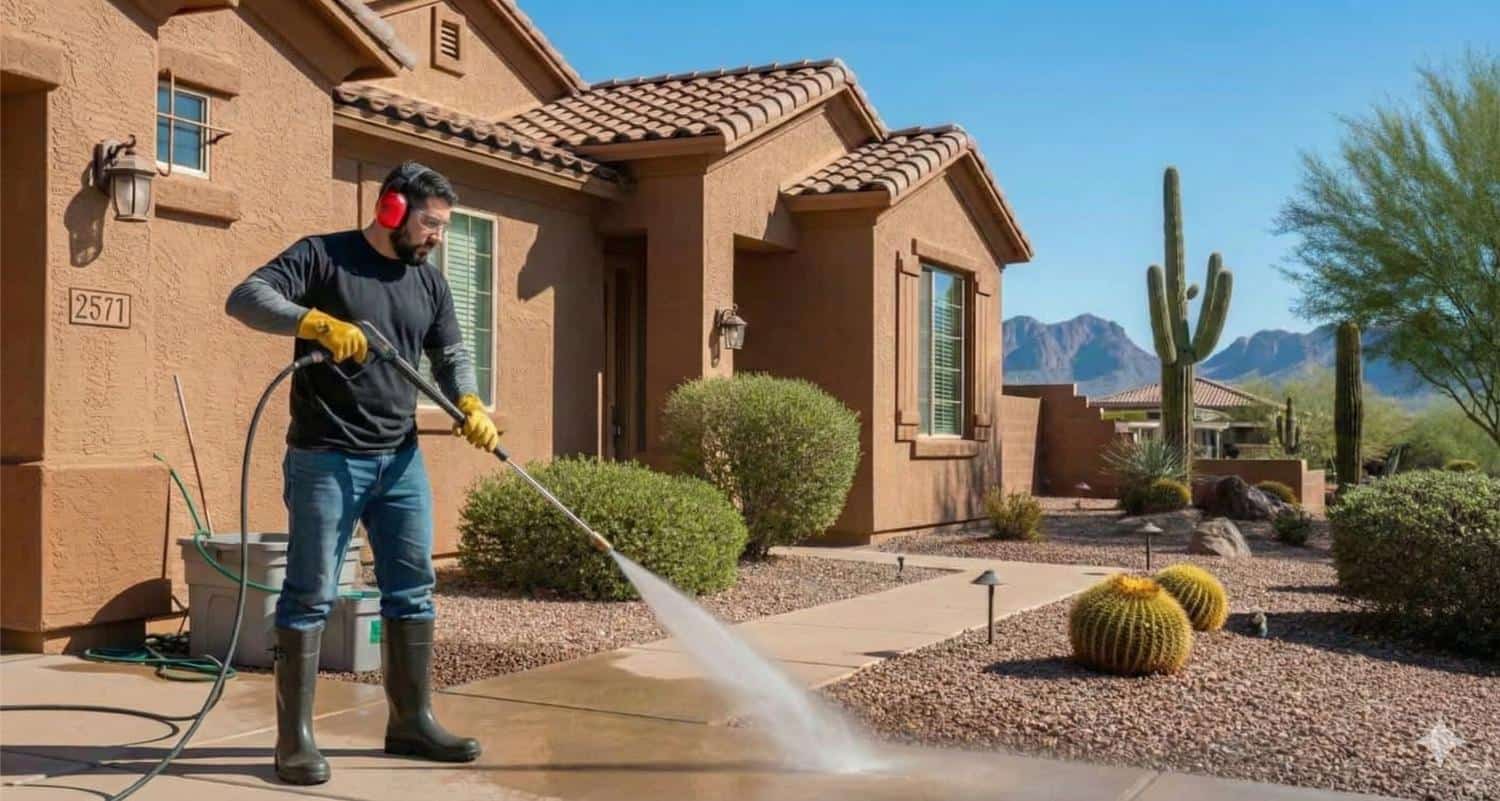
Safety starts with the operator. You will never see a professional working in flip-flops. Our teams utilize:
- High-grade eye protection to prevent debris and chemical splash injuries.
- Steel-toed waterproof boots for stability and foot protection.
- Hearing protection to guard against the decibel levels of industrial engines.
- Respirators when applying specific cleaning agents in confined areas.
The Surface Safety Matrix: PSI Levels & Pressure Washing Safety
One of the critical skills of a professional is knowing exactly how much pressure to apply. We use a technique often called “Soft Washing” for delicate surfaces, relying on cleaning solutions rather than brute force. Below is a matrix illustrating why a professional assessment is vital before cleaning begins.
| Surface Type | Safe PSI Range | Water Temp | Risk of DIY Error |
|---|---|---|---|
| Concrete (Driveways) | 2,500 – 4,000 PSI | Hot (for grease/oil) | High: Visible etching or “striping” marks. |
| Stucco (Facades) | 1,000 – 1,500 PSI | Cold / Warm | Severe: Blowing off texture; water intrusion. |
| Wood (Decks/Fences) | 500 – 1,200 PSI | Cold | Severe: Furring, splintering, and permanent gouging. |
| Vinyl Siding | 1,000 – 1,500 PSI | Cold | Moderate: Forcing water behind panels causing mold. |
| Asphalt | Low Pressure | Cold | High: Stripping aggregate and weakening the binder. |
Arizona-Specific Pressure Washing Safety & Regulations
Operating in Phoenix presents challenges that pressure washers in other parts of the country do not face. Safety here involves navigating environmental mandates and extreme weather conditions.
Clean Water Act Compliance
The Environmental Protection Agency (EPA) and local Arizona authorities strictly regulate stormwater. Professional pressure washing services must utilize containment methods—such as berms, vacuum booms, and reclamation systems—to capture wastewater. This prevents oils, heavy metals, and cleaning detergents from contaminating the groundwater. Hiring a company that ignores these regulations puts the property owner at risk of liability.
Desert Climate Challenges
The Phoenix heat affects how chemicals react. Cleaning solutions can dry rapidly on surfaces, potentially leaving streaks or chemical burns if not managed by an experienced technician. Additionally, during monsoon season, dust control becomes a safety issue. Professionals use specific wetting techniques to manage airborne particulates without creating a mud hazard.
Professional Equipment & Technology: Safety Through Innovation
Safety is also achieved through superior technology. Clean Surface Pressure Washing utilizes equipment that is far more advanced than consumer-grade units.
Hot Water Units & Adjustable Pressure
We utilize industrial hot water pressure washers. Hot water cuts through grease and oil significantly faster than cold water, reducing the need for high pressure and harsh chemicals. Furthermore, our machines feature fully adjustable pressure valves, allowing us to dial down the force instantly when transitioning from a concrete driveway to a delicate decorative paver.
Surface Cleaners vs. Wands
For large flat surfaces, we use rotary surface cleaners. These enclosed units house spinning nozzles that clean evenly without the “tiger striping” effect. More importantly, the enclosure contains debris, preventing rocks and dirt from becoming dangerous projectiles that could break windows or injure bystanders.
Liability, Insurance & Legal Protection
One of the most compelling reasons to hire professional pressure washing services is the transfer of liability. If a homeowner attempts a DIY job and injures a neighbor or damages their own car, the financial burden falls solely on them.
The Safety Net of Professional Insurance
A reputable company carries General Liability Insurance and Workers’ Compensation. This protects you, the homeowner, in the unlikely event of an accident. If a technician is injured on your property, their company’s insurance covers it. If a window seal fails, the liability policy covers the repair. Before allowing anyone to wash your property, verifying that they are licensed, bonded, and insured is a critical safety step.
How to Choose a Safe, Professional Pressure Washing Service
Not all contractors are created equal. When vetting a pressure washing company in Phoenix, look for these safety indicators:
- Proof of Insurance: Ask for a current certificate of General Liability and Workers’ Comp.
- Water Reclamation: Ask how they handle wastewater to ensure environmental compliance.
- Surface Knowledge: Ask them to explain their process for your specific surfaces (e.g., “How do you wash stucco without damaging it?”).
- Reviews and References: Look for a history of satisfied customers who can vouch for their care and professionalism.
Do you have questions about the safety of your property or need a professional assessment? Give us a call at Clean Surface Pressure Washing to discuss your needs.
Frequently Asked Questions
Is pressure washing safe for my stucco home?
Yes, but only if done correctly using a “Soft Wash” technique. High pressure should never be applied directly to stucco as it can crumble the texture and cause water intrusion. Professionals use specialized low-pressure nozzles and cleaning solutions to remove dirt safely.
Will pressure washing chemicals harm my plants?
Professional services use eco-friendly cleaning solutions and specific pre-soaking and post-rinsing techniques to protect your landscaping. We ensure that plants are saturated with fresh water before and after cleaning to dilute any potential runoff.
Why shouldn’t I just rent a machine and do it myself?
Renting a machine carries risks of personal injury, property damage, and environmental fines. Without training, it is easy to use too much pressure, which can etch concrete or break windows. Professionals have the experience, insurance, and equipment to do the job safely and effectively.
What is the difference between pressure washing and power washing?
While often used interchangeably, “power washing” typically refers to using hot water, while “pressure washing” uses cold water. Hot water is essential for safety when removing grease, oil, and chewing gum, as it cleans effectively without requiring dangerously high pressure.