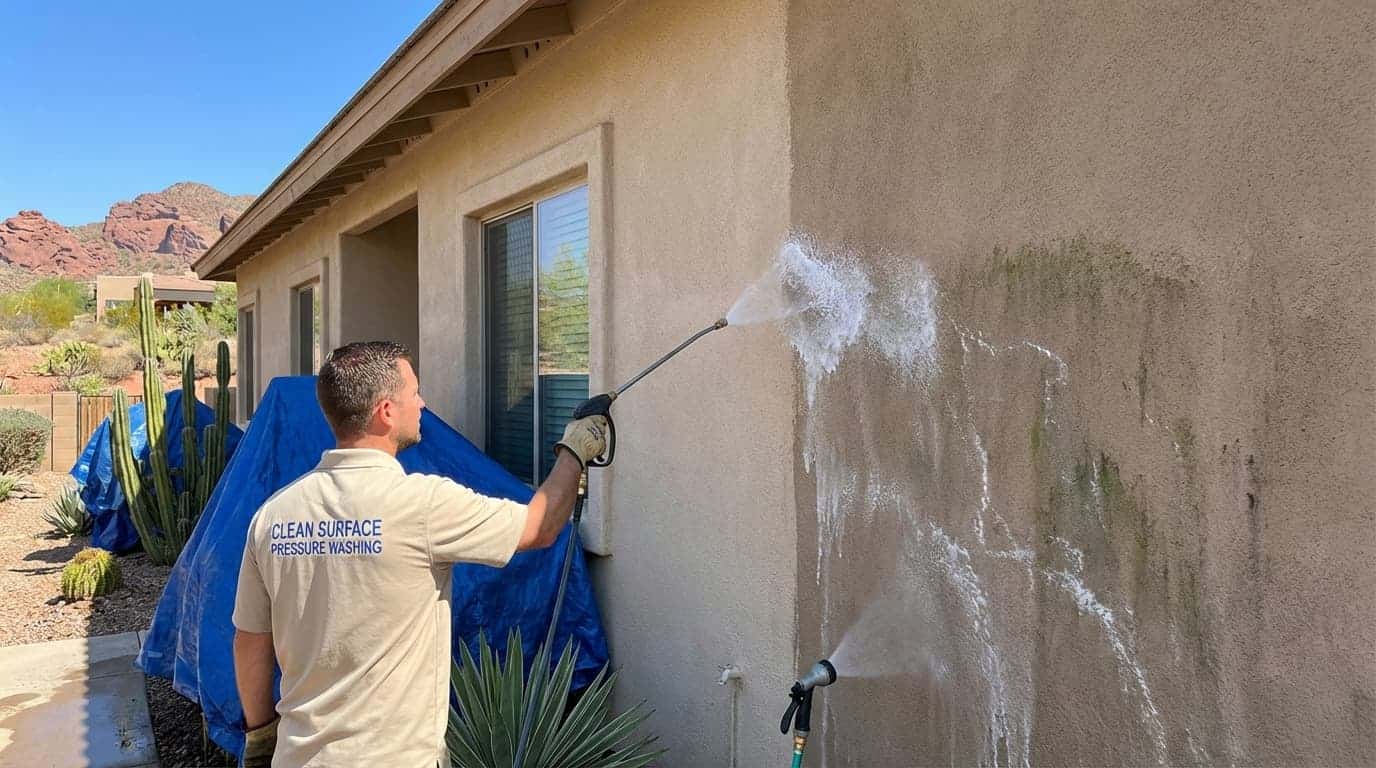
Stucco Cleaning Tips: Gentle Care for Arizona’s Favorite Exterior
If you are looking for reliable stucco cleaning phoenix homeowners trust, you already know that the desert climate can be brutal on your home’s exterior. Dust storms, intense heat, and hard water can turn a beautiful facade into a chalky, stained mess. The secret to restoring that curb appeal without causing expensive damage is to soft wash stucco house surfaces instead of blasting them with high pressure. In this guide, Clean Surface Pressure Washing shares expert, Phoenix-specific advice to safely maintain and protect your home.
Why Phoenix Stucco Needs Gentle Cleaning (And What Happens If You Skip It)
Stucco is highly porous, meaning it acts like a giant sponge for airborne dirt, moisture, and minerals. When you combine this texture with the unique environment of Phoenix, regular exterior cleaning becomes a vital part of home maintenance. Skipping this chore allows contaminants to bake into the surface under the Arizona sun, leading to permanent discoloration and even structural degradation.
Here are the four Phoenix-specific stucco threats you need to watch out for:
- Desert Dust Storms (Haboobs): Fine particulate matter gets deeply embedded in the rough texture of stucco, making it look dull and brown.
- Hard Water Minerals: Phoenix is notorious for its hard water. When irrigation sprinklers overspray onto your home, they leave behind stubborn, white calcium and magnesium deposits.
- Monsoon Algae and Mold: Despite the heat, the shaded sides of your home can trap moisture during monsoon season, creating a breeding ground for green or black algae.
- Heat-Baked Grime: UV rays essentially bake pollutants into the porous surface, making them incredibly difficult to remove without the right chemical agents.
Using traditional high-pressure washing to blast away these threats is a massive mistake. High pressure can easily chip the stucco, force water behind the exterior coating, and lead to catastrophic moisture damage or cracking. That is why professional, low-pressure soft washing is the only recommended method to extend the longevity of your exterior.
Soft Wash vs. Pressure Washing: The Safe Choice for Stucco Houses
Understanding the difference between cleaning methods can save you thousands in wall repairs. Pressure washing relies on sheer mechanical force, often exceeding 2,000 PSI (pounds per square inch), to strip dirt away. Soft washing, on the other hand, utilizes a gentle application of water mixed with biodegradable cleaning solutions, usually applied at less than 500 PSI, similar to the pressure of a standard garden hose.
When you soft wash stucco house exteriors, the cleaning agents do the heavy lifting by breaking down organic matter, killing algae at the root, and dissolving mineral stains without the risk of physical impact.
| Cleaning Method | Pressure Level | Damage Potential to Stucco | Effectiveness on Algae/Stains | Phoenix Suitability |
|---|---|---|---|---|
| Traditional Pressure Washing | High (1,500 to 4,000+ PSI) | High (Chipping, cracking, water intrusion) | Moderate (Only removes surface layer) | Poor (Too aggressive for porous desert exteriors) |
| Soft Washing | Low (Under 500 PSI) | Low (Safe for all stucco types) | High (Kills organic growth at the root) | Excellent (Ideal for gentle, thorough maintenance) |
DIY Stucco Cleaning Tips: Gentle Steps for Phoenix Homeowners
If you want to tackle minor dirt accumulation yourself, you must proceed with caution. The goal of DIY stucco cleaning phoenix is to use the least amount of pressure necessary. Here is a safe, five-step soft wash process you can try at home.
1. Inspect for Damage
Before applying any water, walk around your home and look for hairline cracks, chipping paint, or exposed lath. Seal any cracks with an exterior-grade masonry caulk to prevent water intrusion.
2. Pre-Rinse Gently
Using a standard garden hose, lightly mist the surrounding plants and grass to protect them from cleaning solutions. Then, wet the stucco wall from the bottom up to prevent the cleaning mixture from leaving run-down streaks.
3. Apply a Mild Cleaning Solution
Mix a heavily diluted solution of household bleach and water (no more than a 1 to 10 ratio) along with a few drops of dish soap to act as a surfactant. Use a pump sprayer to apply this mixture from the bottom up. Let it sit for 5 to 10 minutes, but do not let it dry on the wall in the hot Phoenix sun.
4. Low-Pressure Rinse
Rinse the wall from the top down using your garden hose. If you encounter a stubborn dirt spot, use a soft-bristled brush to gently agitate the area. Never use a stiff wire brush on stucco.
5. Dry and Evaluate
Allow the wall to air dry completely. If stains persist, you have reached the limits of DIY cleaning and should consult a professional soft washing service to prevent accidental damage.
Phoenix-Specific Challenges: Tackling Dust, Hard Water, and Algae on Stucco
Arizona homeowners face a distinct set of exterior cleaning hurdles. Dust storms coat homes in fine, abrasive grit that settles deeply into the stucco crevices. To manage this, a seasonal low-pressure rinse with a garden hose can prevent heavy buildup.
Hard water from poorly adjusted irrigation systems is another massive headache. As the water evaporates in the heat, it leaves behind chalky, white calcium rings. A quick DIY fix for minor mineral spots is a mixture of equal parts white vinegar and water. Spray the vinegar solution onto the stain, let it sit for a few minutes to break down the calcium, and gently scrub with a soft brush before rinsing.
Finally, monsoon season brings a surprising amount of humidity, leading to algae and mildew growth on the north-facing, shaded sides of your home. Treating these areas requires a specialized biocide or soft wash surfactant to kill the spores, as simply spraying them with water will only encourage them to grow back thicker.
2026 Phoenix Stucco Cleaning Cost Guide (DIY vs. Pro)
Understanding the costs associated with stucco maintenance helps you make an informed decision between tackling the job yourself or hiring a professional. Here is an updated look at what you can expect to spend in the Phoenix market for 2026.
| Method | Estimated Cost (2,000 sq ft home) | What is Included | Time Investment |
|---|---|---|---|
| DIY Cleaning | $50 to $200 | Pump sprayer, soft brushes, eco-friendly cleaning solutions, hose attachments. | 6 to 8 hours of labor, plus setup and cleanup. |
| Professional Soft Washing | $600 to $1,000 ($0.30 to $0.50 per sq ft) | Commercial-grade detergents, professional low-pressure equipment, plant protection, guaranteed stain removal. | 2 to 4 hours (Done completely by the pros). |
Keep in mind that factors such as the size of your home, the severity of hard water stains, and whether your home is a single-story or two-story building will influence the final professional quote.
Hard Water Stain Troubleshooting Table for Arizona Stucco
Hard water is the enemy of dark-painted stucco homes. Use this troubleshooting guide to identify and safely address mineral deposits.
| Symptom | Common Cause | DIY Fix | When to Call a Pro |
|---|---|---|---|
| Faint white dusting near the foundation | Sprinkler overspray hitting the lower walls. | Adjust sprinkler heads, soak stains with a 50/50 vinegar and water mix, scrub gently. | If the stain covers a large area or does not dissolve with vinegar. |
| Thick, crusty white or yellow streaks | Long-term exposure to hard water from leaky gutters or constant irrigation. | Not recommended for DIY. Aggressive scrubbing will remove the stucco paint. | Immediate pro attention needed for specialized, acid-based soft wash treatments. |
| Dark rust-colored spots | Iron deposits in the water supply or rusting metal fixtures nearby. | Apply a specialized, store-bought rust remover (test in a hidden spot first). | If the rust is widespread or located on a delicate architectural feature. |
Maintenance Calendar: Keep Your Phoenix Stucco Spotless Year-Round
Preventative maintenance is the best way to avoid expensive restoration work. Follow this Arizona-friendly stucco care schedule:
- Spring (Post-Dust Storm Prep): After the early spring winds, inspect your home for new cracks and gently rinse off surface dust to prepare for the hotter months.
- Summer (Pre-Monsoon Check): Ensure gutters and downspouts are clear to prevent monsoon rains from overflowing and causing water stains down the sides of your stucco.
- Fall (Post-Monsoon Cleanup): This is the prime time to check the shaded areas of your home for algae or mildew growth caused by late-summer humidity. Book a professional soft wash if you spot green or black streaks.
- Winter (Mild Rinse): Use the cooler weather to touch up your home with a light, low-pressure rinse and address any hard water stains accumulated from year-round irrigation.
When DIY Isn’t Enough: Why Phoenix Pros Like Clean Surface Excel
While DIY maintenance is great for light dust, it rarely cuts through years of heat-baked grime, stubborn calcium deposits, or deep-rooted algae. This is where the experts step in. Professional soft washing requires precise chemical blending, commercial-grade low-pressure pumps, and a deep understanding of Arizona’s unique building materials.
Clean Surface Pressure Washing stands out because we prioritize the safety of your home. Our eco-friendly solutions neutralize organic growth and lift away dirt without ever risking the structural integrity of your stucco. We are fully insured, highly experienced with Phoenix exteriors, and committed to leaving your property looking brand new.
Have questions about soft washing your stucco home? Give Clean Surface Pressure Washing a call today to schedule your professional cleaning, get a free quote, and protect your Arizona property the safe way.
Frequently Asked Questions
Is soft washing safe for older stucco homes?
Yes, soft washing is the safest and most effective method for cleaning stucco, regardless of its age. Because it relies on low water pressure and specialized cleaning agents, it will not chip, crack, or force water behind the exterior coating of older or delicate stucco systems.
How often should I clean my stucco house in Phoenix?
Most Phoenix homeowners benefit from a professional soft wash once a year. However, if your home is heavily exposed to dust storms, is located near a busy road, or suffers from frequent hard water overspray, you may want to consider scheduling a cleaning every six to eight months.
Can I use a pressure washer on a low setting instead of soft washing?
It is highly discouraged. Even on a low setting, standard pressure washers can produce irregular bursts of pressure that can easily damage porous stucco. Professional soft washing equipment is specifically calibrated to deliver high water volume at very low pressure, ensuring an even, damage-free clean.
Will soft washing chemicals harm my desert landscaping?
No, professional soft washing uses biodegradable solutions. A reputable company will thoroughly pre-rinse your surrounding plants, shrubs, and grass, and cover delicate flora to ensure everything remains protected and healthy throughout the cleaning process.
Can hard water stains be permanently prevented?
While you cannot change the municipal water supply, you can prevent hard water stains from forming on your stucco by adjusting your irrigation sprinkler heads so they do not spray directly onto your house walls. Fixing leaky gutters will also stop calcium-rich water from trailing down your exterior.